
root@krueger:~/products/simdex$ cat README
A darker market product built to move from signal to action with less friction.
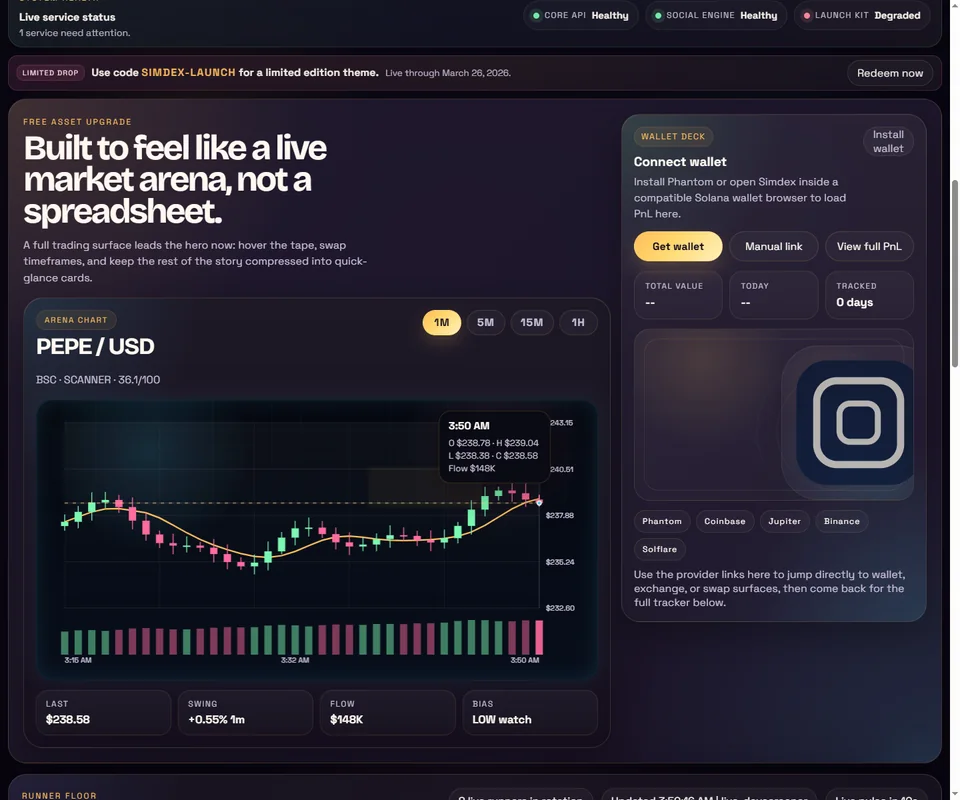
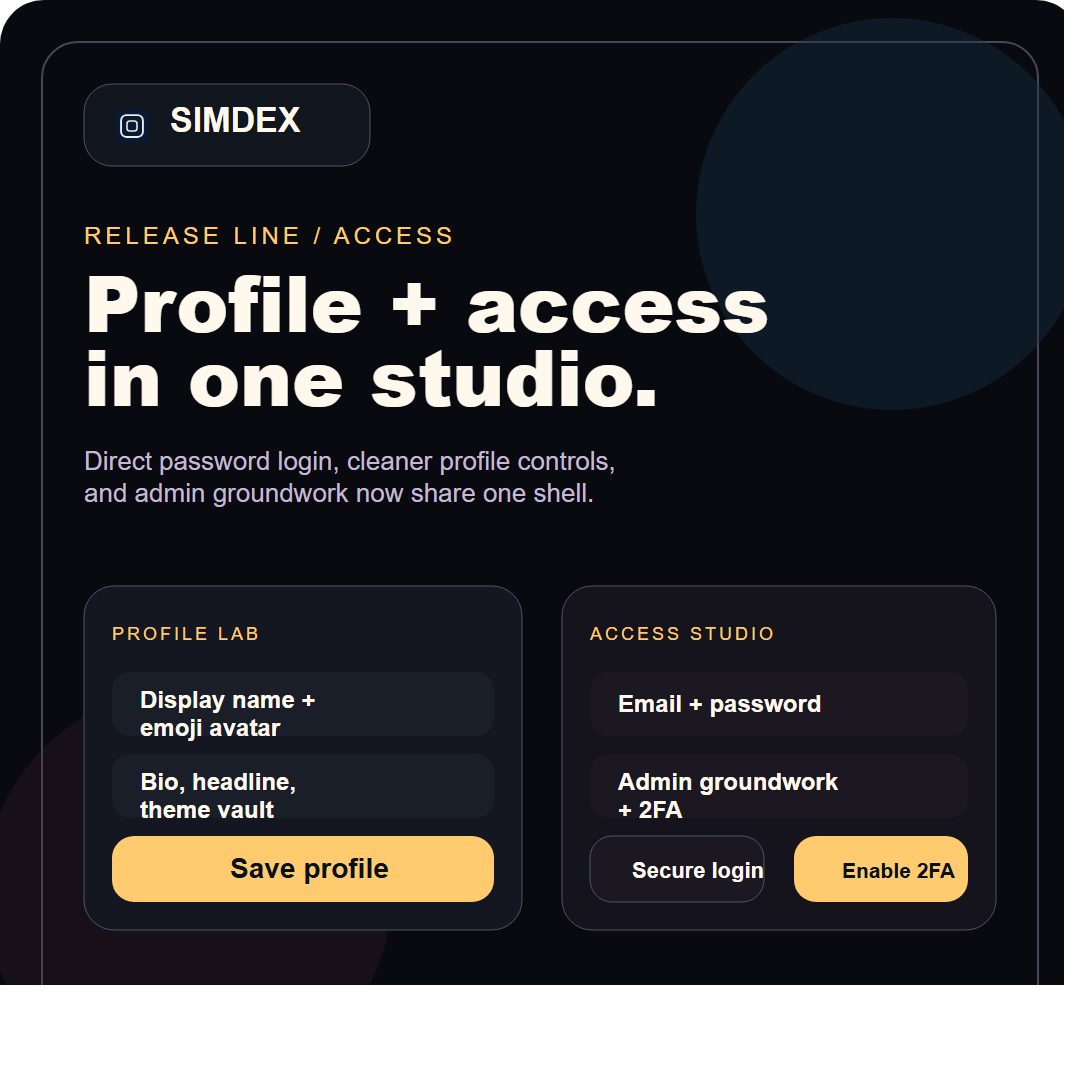
SimDex now runs at simdexapp.com and has moved past a pure runner board into a fuller operator surface: live board discovery, black-terminal Dex Mode, wallet PnL calendar, trade history, token rooms with whale ranking, news rails, and social draft automation.
cat overview.txt
SimDex stands out once live discovery, portfolio context, room chatter, and execution all stay inside one shell.
Generic scanners stop at discovery
Most tools surface coins and charts but leave the user to build context, trust, and execution flow somewhere else.
One operator surface
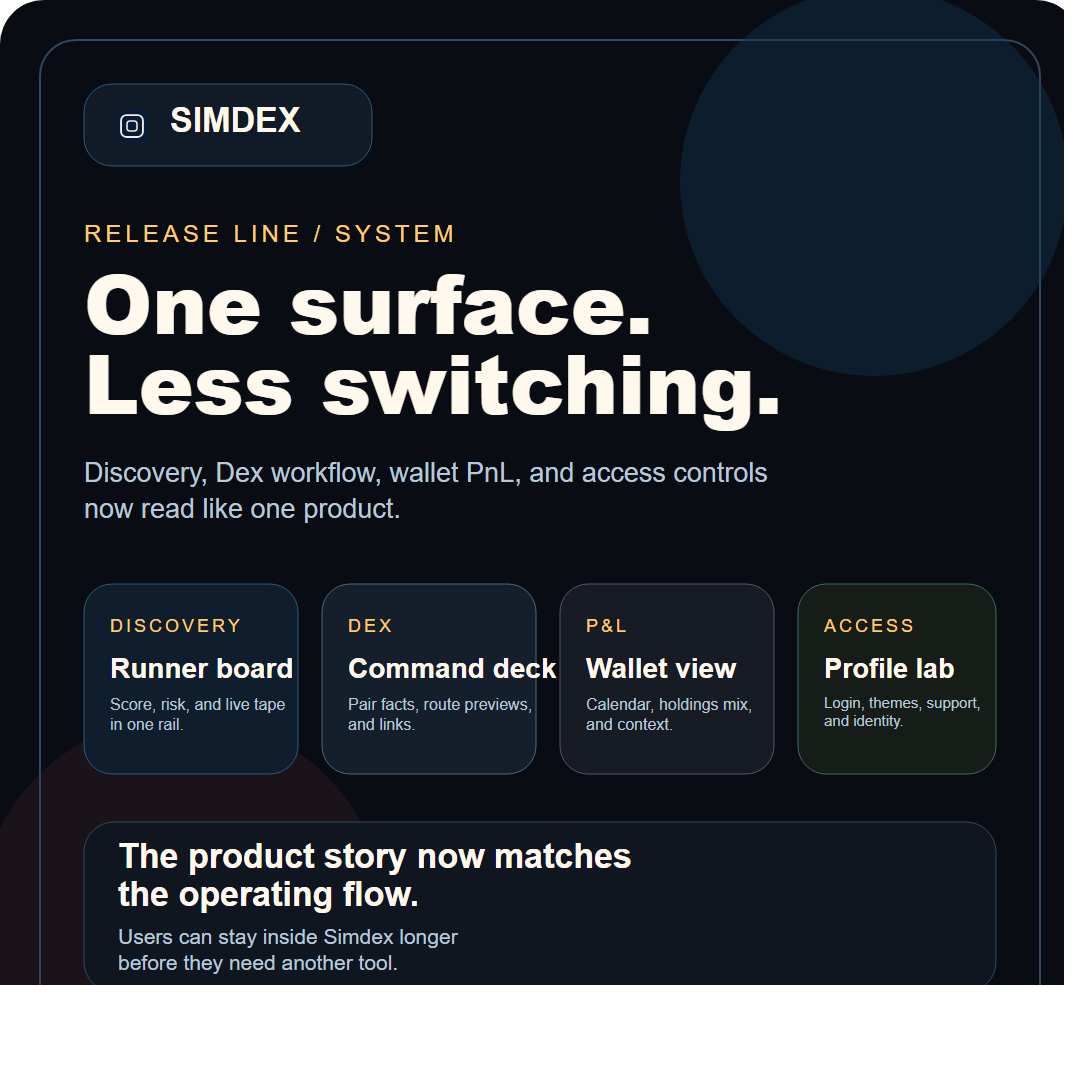
SimDex ties runner scoring, Dex Mode, wallet PnL, token rooms, social automation, news rails, and company positioning into one ecosystem.
More believable operator UX
The product feels closer to a trading cockpit than a single-page scanner clone, and it gives users more reasons to stay inside the same surface.
My role
I pushed the product stance, information architecture, and frontend system further than a standard dashboard build.
- Defined the board, Dex Mode, company, and why-SimDex route architecture
- Shaped the visual language and information density for faster signal reading
- Connected brand positioning and launch assets directly to the live product shell
- Built around the real API surface: candidates, trade quote, auth, launch kit, social drafts, wallet data, rooms, and portfolio endpoints
Snapshots
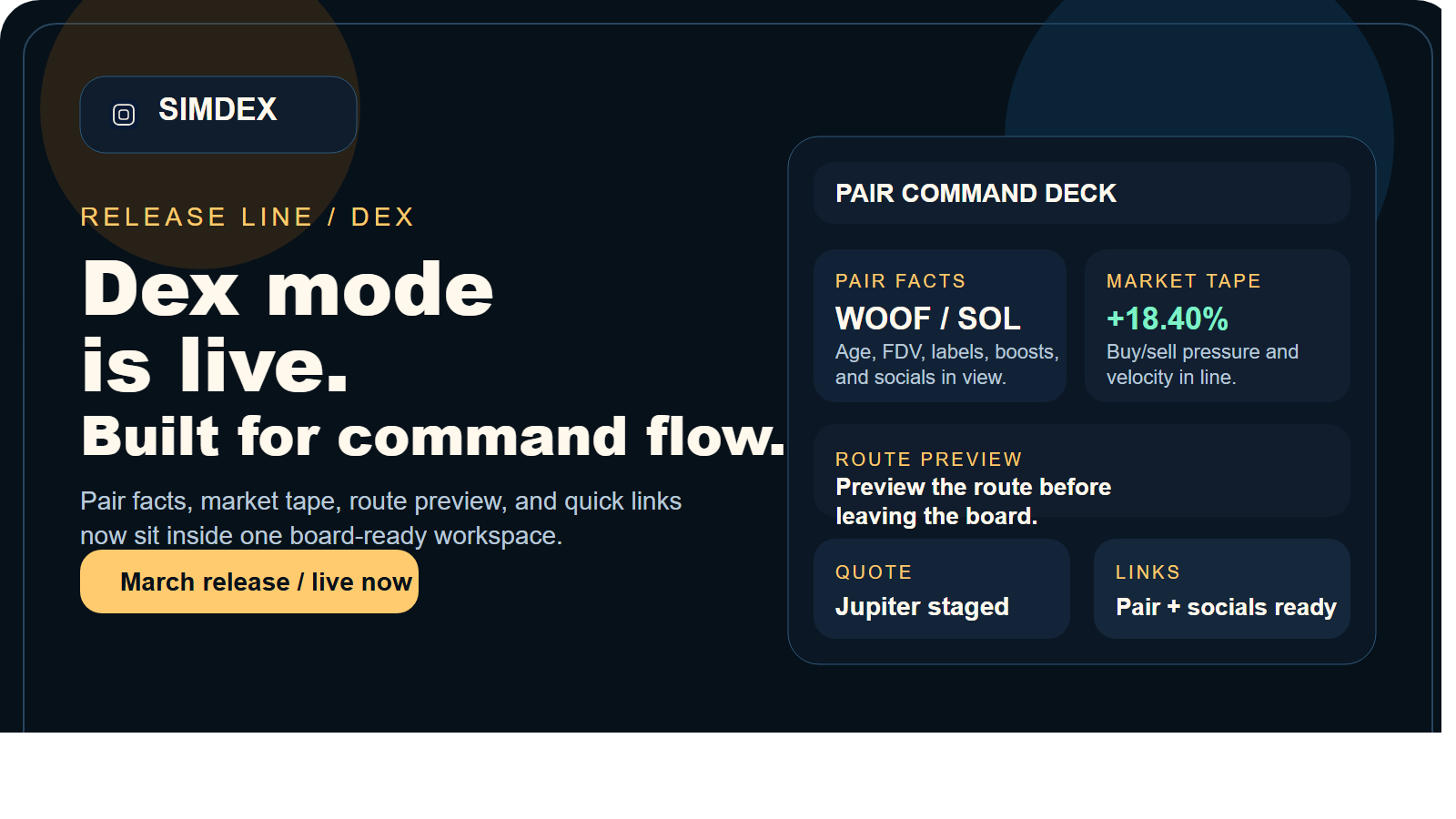
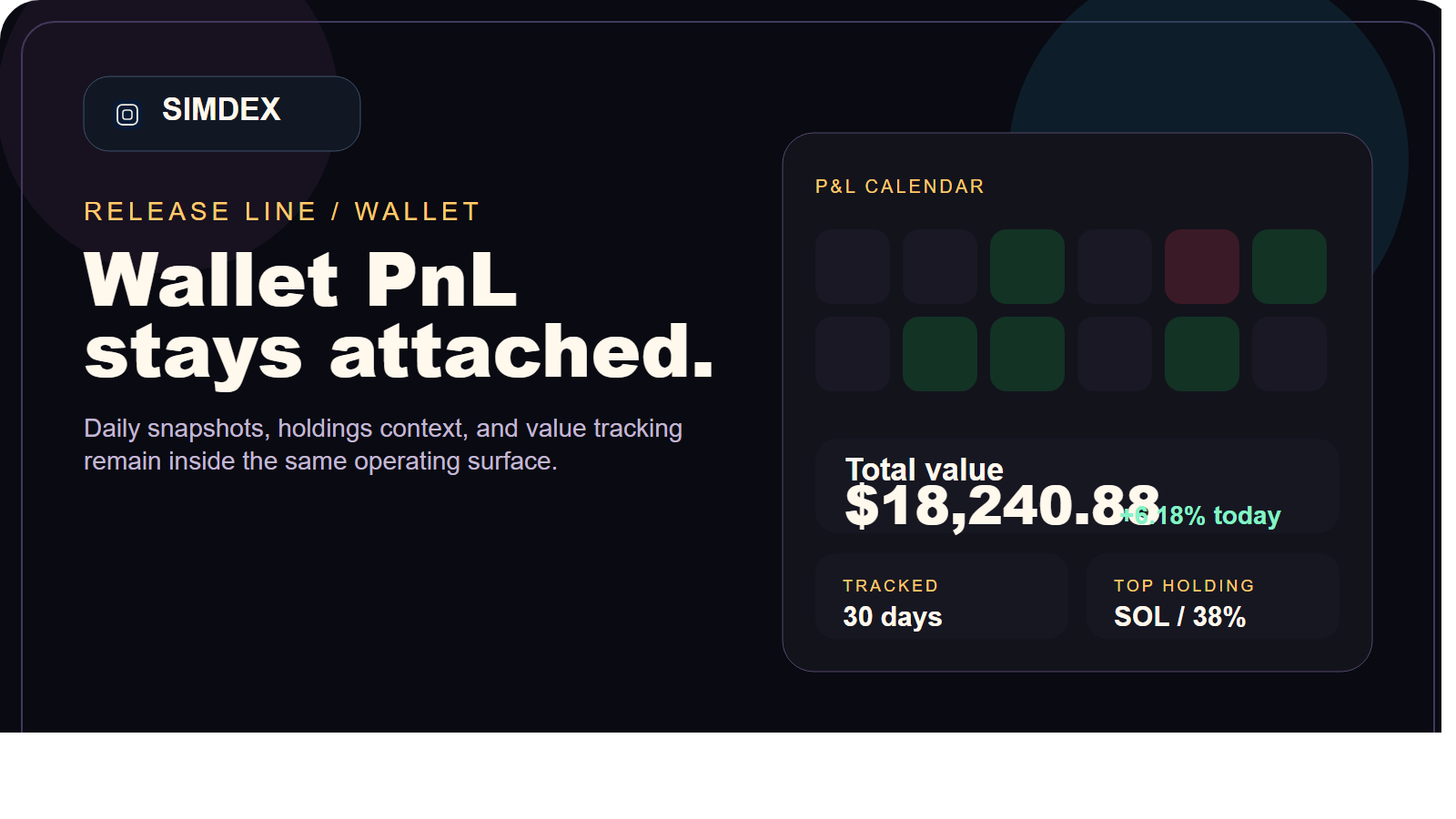
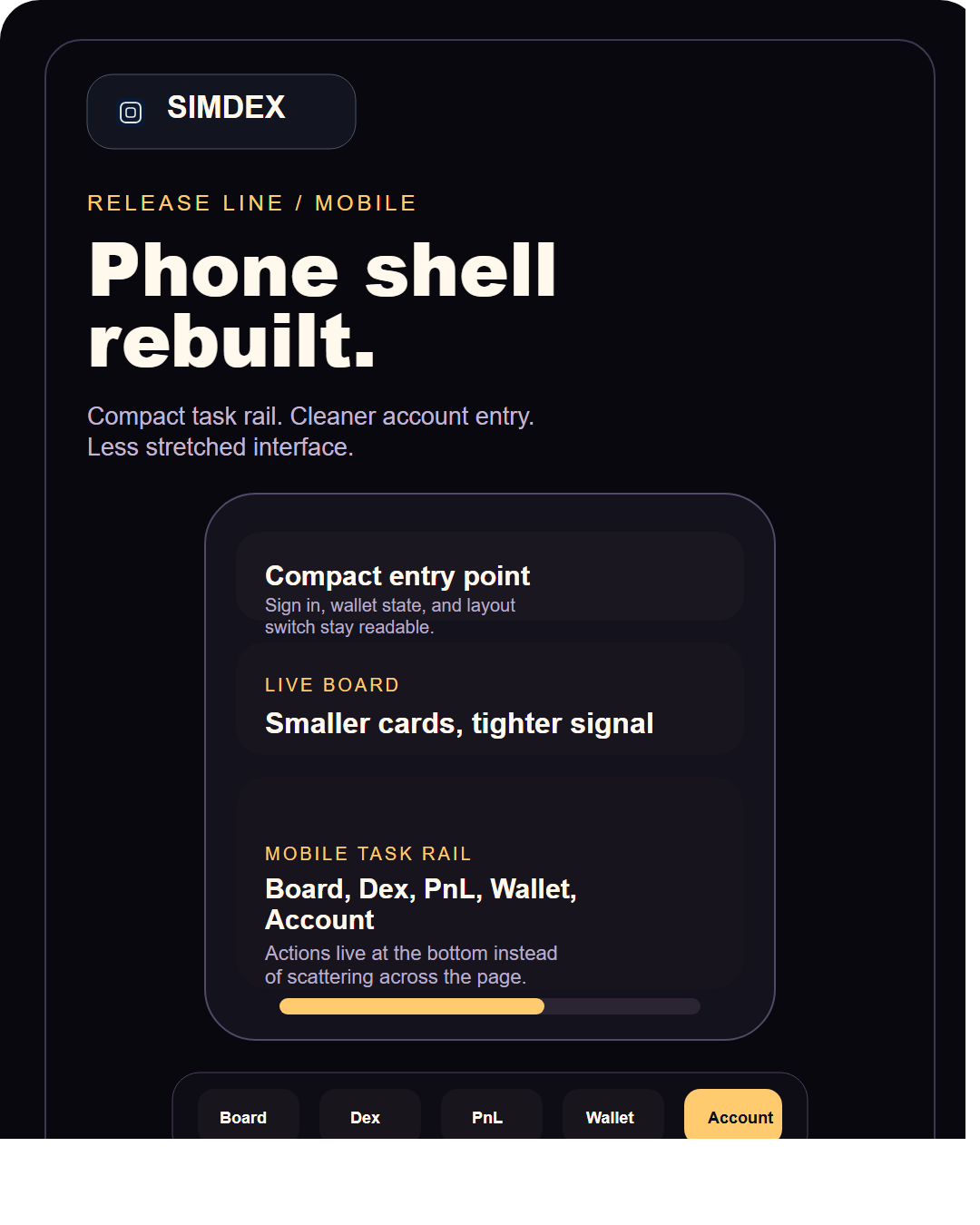
Newer live-app and launch-line visuals from the latest SimDex push.
Project stack
SimDex is a browser-first product with backend logic, account systems, and live market context driving the surface.
Backend
Python 3.11, FastAPI, Pydantic Settings, Uvicorn, Authlib, HTTPX, SQLite
Frontend
Browser UI served from FastAPI with dedicated board, Dex, wallet context, room, company, and why-SimDex surfaces
Integrations
DEX Screener, Phantom wallet, Jupiter quote/build swap flows, Google and Discord OAuth, social packs, and live news embeds
Notable features
These are direct capabilities from the current codebase and route layer.
`/`, `/app`, `/company`, `/company/why-simdex`, `/dex`
The project treats brand, explanation, and live app work as one system instead of separate websites.
Wallet portfolio, holdings calendar, trade history, token rooms, whale board, news rail
The live app now keeps more post-discovery context inside the surface instead of sending the user to another tool to continue thinking.
Health, candidates, quote, build swap, auth, bookmarks, wallet links, gift codes, social drafts
The UI is backed by real product endpoints, not static mock cards pretending to be a platform.
Directional KPIs
If SimDex kept scaling, these are the product numbers I would care about most.
Target repeated board and Dex Mode return behavior for active users.
Target share of active users connecting a wallet and letting SimDex keep portfolio state inside the core surface.
Target share of active users who move from discovery into token-room discussion, whale tracking, or social drafting.
Target users who request quote previews or swap builds after board exploration.
Target weekly retention once portfolio, rooms, news, and wallet history deepen the loop.
Timeline
The product matures by layering trust and action on top of the runner board core.
Runner board MVP
FastAPI, browser UI, scoring engine, candidate filters, and the first live board surface establish the product core.
Account and portfolio layer
Persistent auth, bookmarks, wallet context, trade history, and the PnL calendar make the app feel more like a real operating surface.
Dex, room, and action layer
Jupiter quote previews, swap build support, Dex Mode, room chatter, whale ranking, and social drafts keep discovery close to actual action.
Launch-line and live-domain layer
simdexapp.com, company pages, why-SimDex comparison, and launch-line assets explain why the product matters without disconnecting from the app.
Architecture
The architecture keeps ranking, context, and action within the same orbit.
Ingestion
DEX Screener + scoring engine
->
Surface
Board + Dex Mode + token detail
->
Action layer
Wallet + PnL + rooms + quote + build swap + social drafts
Backend core
FastAPI serves both the route layer and the APIs, with gzip, trusted hosts, session middleware, and deployment hardening.
Market logic
Weighted scoring, risk penalties, candidate filters, token detail views, portfolio endpoints, and room context produce the board’s operating logic.
Public layer
Company, why-SimDex, and launch-line assets act as product explanation surfaces, not generic marketing pages disconnected from the app.
Hardest tradeoff
SimDex has to stay dense enough for serious users without turning into a wall of information that only the builder understands.
The main tradeoff was deciding how much raw signal to keep visible at once. I kept the interface dense, but pushed harder on route separation and brand explanation so the product could stay operational without becoming unreadable.
- More density improves trust for serious users but raises onboarding cost
- Wallet and action rails increase product depth but also increase responsibility for clarity
- Public explanation pages are necessary because the live app alone does not tell the whole story
What I would build next
If I kept pushing SimDex, I would focus on making post-discovery decisions even tighter.
Richer wallet behavior intelligence
Push holdings mix, linked-wallet behavior, and historical context further into the decision surface.
Alerts and rescoring workers
Periodic rescoring and alert delivery would make SimDex feel more like a live operator product than a pull-to-refresh tool.
Execution UX and monitoring
Trade confirmation guardrails, explorer/history surfaces, and production monitoring are the next serious maturity step.
Next case study
Jump from the trading cockpit back into the guided Kineo mobile health system.
SimDex shows darker operational density. Kineo shows calmer habit-building, coaching, and premium daily product flow.